
Condition
Varicose Veins
Varicose veins are the enlarged, rope-like veins that bulge at the surface of the legs. They are not just cosmetic: they are usually a sign of venous reflux, where the one-way valves inside the vein fail and blood pools instead of flowing back to the heart.
Medically reviewed by Dr. Roger Eduardo, MD, FASMBS, Board-Certified General Surgeon. Last reviewed August 2026.
Book a consultation →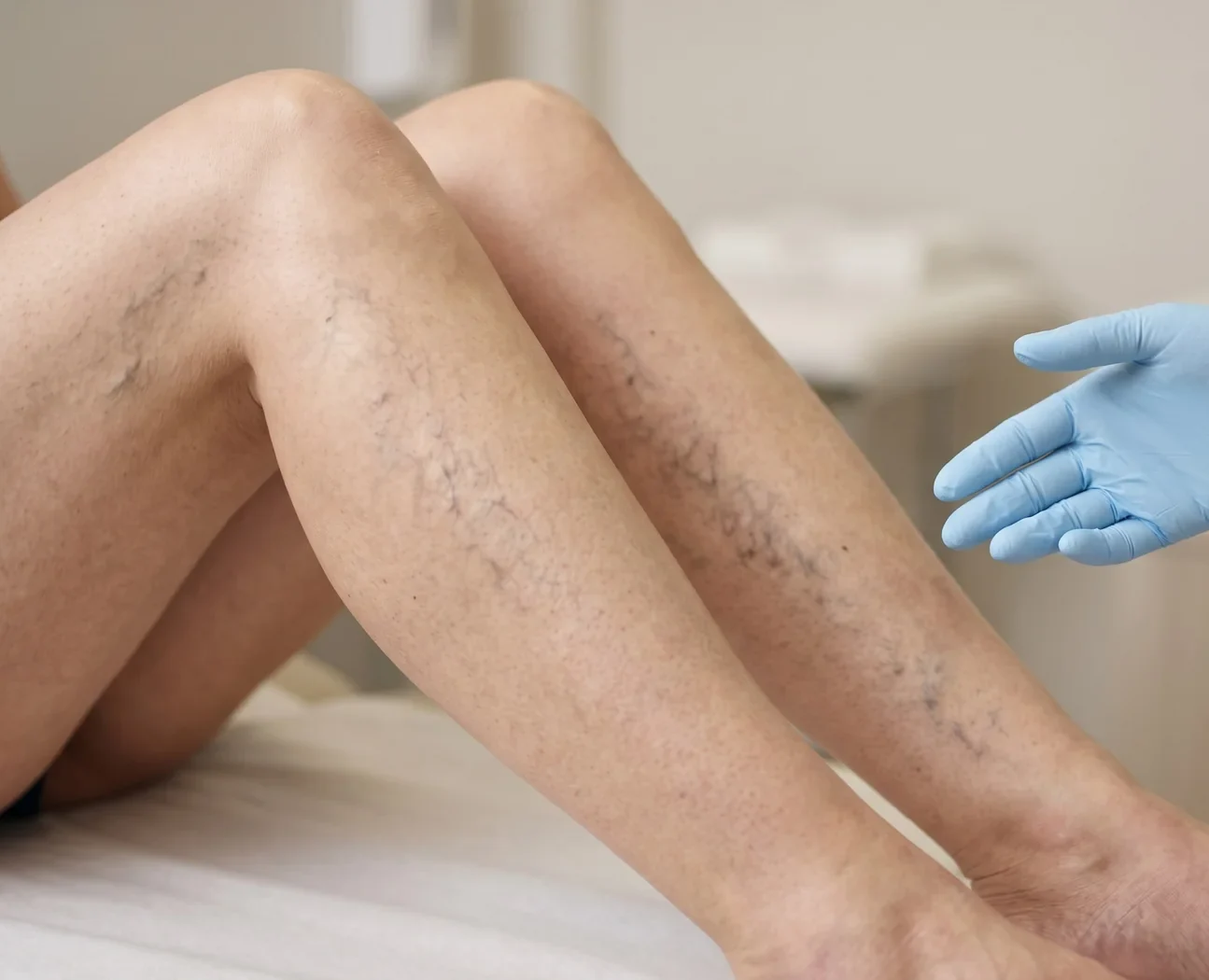
Understanding Varicose Veins
Healthy leg veins carry blood upward against gravity using a series of one-way valves. When those valves weaken, blood flows backward and pools, raising pressure in the surface veins until they stretch, twist and bulge into varicose veins.
Because varicose veins are usually driven by underlying valve failure, treating only the surface vein without addressing the reflux often leads to recurrence. That is why evaluation at Omnia begins with a duplex ultrasound to find the source, so the right vein is treated.
Symptoms
What it can feel like
- ◆Bulging, rope-like or twisted veins, usually on the legs.
- ◆Aching, heaviness or tiredness in the legs, worse at day's end.
- ◆Swelling around the ankles.
- ◆Itching or throbbing over the veins.
- ◆In longer-standing cases, skin darkening or sores near the ankle.
Causes
What drives it
- ◆Failing one-way valves in the leg veins (venous reflux).
- ◆Family history of vein disease.
- ◆Prolonged standing, pregnancy, age and hormonal factors.
- ◆Prior blood clots that damaged vein valves.
When to seek care
See a vein specialist if your varicose veins ache, swell or throb, if the skin around your ankles is changing color or hardening, or if a vein bleeds. Early treatment is easier and helps prevent the skin changes and ulcers that untreated reflux can cause.
How we treat Varicose Veins
Care begins with the right diagnosis, then a plan matched to you by one physician who follows you through it.
Radiofrequency ablation
The thermal standard for closing the faulty saphenous vein.
Learn more →VenaSeal
A no-heat, no-compression medical-adhesive closure.
Learn more →Varithena
Microfoam for tortuous veins other methods cannot reach.
Learn more →Microphlebectomy
Removal of bulging surface varicose veins through tiny punctures.
Learn more →Condition FAQ
Varicose Veins: common questions
Can't find your answer here? Call us at (470) 742-1832 or book a consultation, we'll answer every question before you commit to anything.
Often not. Varicose veins are usually a sign of venous reflux, an underlying valve problem that can progress to swelling, skin changes and ulcers. When they cause symptoms, treatment is medically necessary and typically covered by insurance.
Treating the underlying reflux at its source, rather than just the visible vein, gives the most durable result. New veins can develop over time, which is why an ultrasound-guided plan and follow-up matter. Purely surface treatment without addressing the source has a higher recurrence rate.
When varicose veins cause medical symptoms and criteria are met, treatment is typically covered, often after a documented trial of compression. We verify your specific benefits before scheduling.
Start your journey
Concerned about varicose veins?
Book a consultation with Dr. Eduardo for a clear diagnosis and a plan matched to you.