The condition
Venous Reflux & Chronic Venous Insufficiency
Medically reviewed by Dr. Roger Eduardo, MD, FASMBS, Board-Certified General Surgeon. Last reviewed August 2026.
Book a consultation →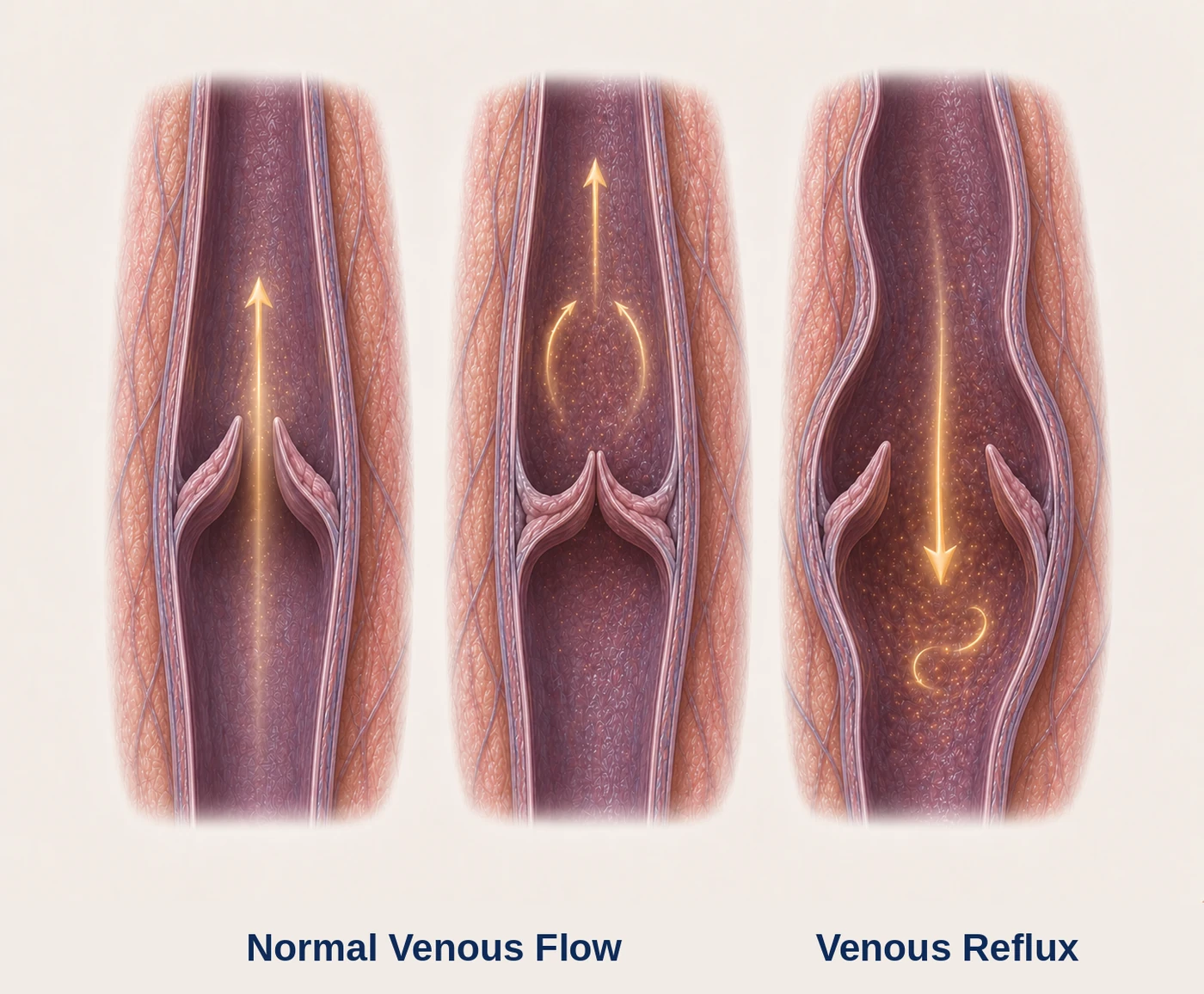
What is venous reflux?
Venous reflux (also called chronic venous insufficiency (CVI)) is a condition in which the one-way valves inside your leg veins weaken or fail, allowing blood to flow backward and pool in the lower leg instead of returning to the heart. That backward pressure is the underlying cause of most varicose veins, leg swelling, aching and skin changes. It's a mechanical valve problem, and it's highly treatable once it's identified.
How the valves fail
To return blood to the heart, your leg veins must push it upward against gravity. They rely on a series of one-way valves that open to let blood up and close to stop it falling back down. When a valve stretches or weakens, it no longer seals, blood leaks backward (refluxes) and collects in the veins below. The added pressure stretches those veins further, which damages more valves, which raises pressure again. That self-reinforcing cycle is why untreated vein disease tends to get worse, not better.
Why visible veins are just the surface
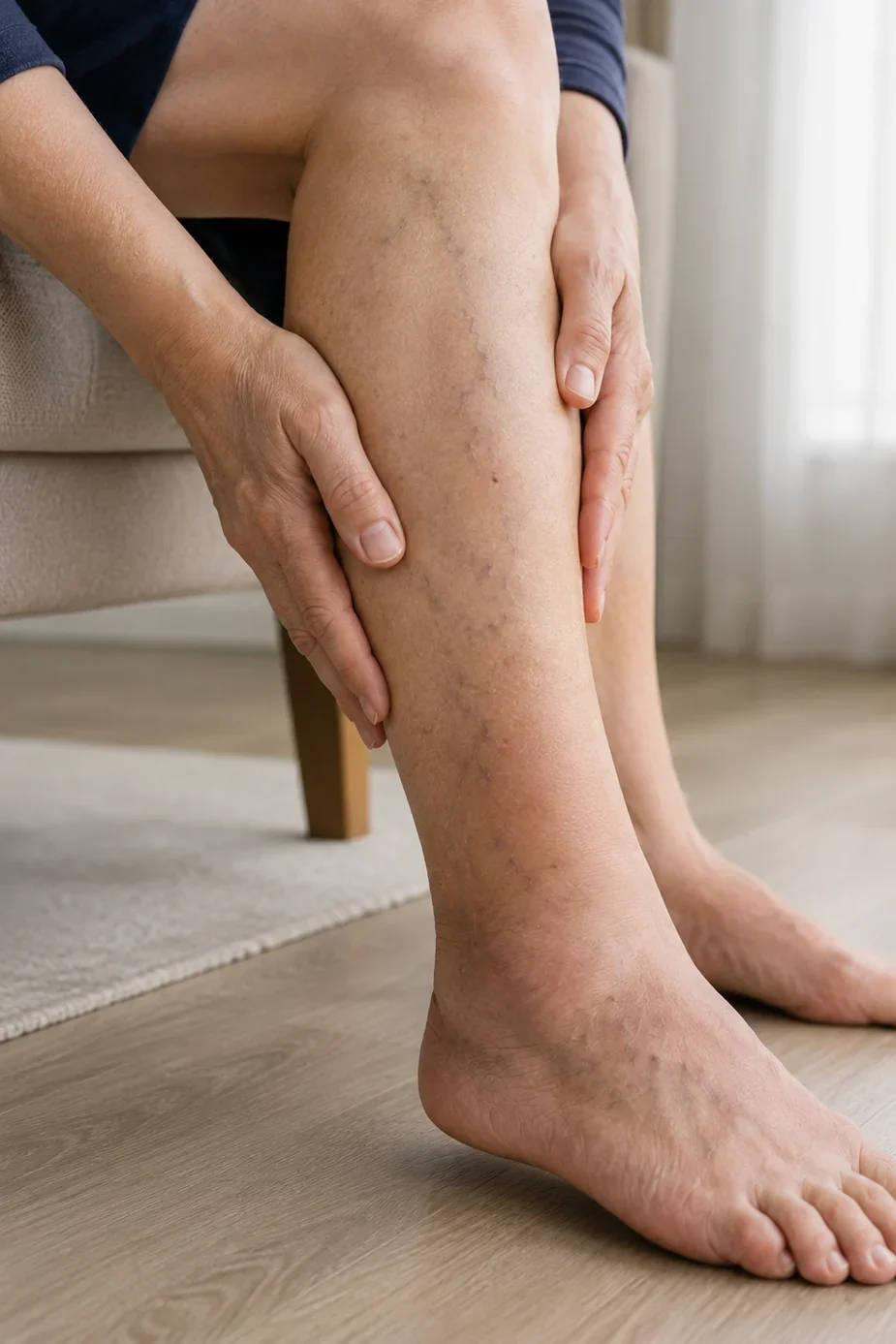
The bulging varicose veins and fine spider veins you can see are the visible symptom of pressure building in the system, not the whole problem. Often the source is a larger, deeper vein (commonly the great saphenous vein) that you can't see at all. That's why treatment targets the underlying refluxing vein, not just the cosmetic surface veins, and why a duplex ultrasound is essential before any procedure.
Symptoms
Venous reflux can cause more than visible veins. Common symptoms include:
- ✓Heavy, aching or fatigued legs, especially after standing
- ✓Visible varicose or bulging veins
- ✓Leg or ankle swelling by the end of the day
- ✓Itching or burning over vein areas
- ✓Leg cramps, especially at night
- ✓Skin discoloration near the ankle
- ✓Restless leg sensations
- ✓Spider veins
How we diagnose it
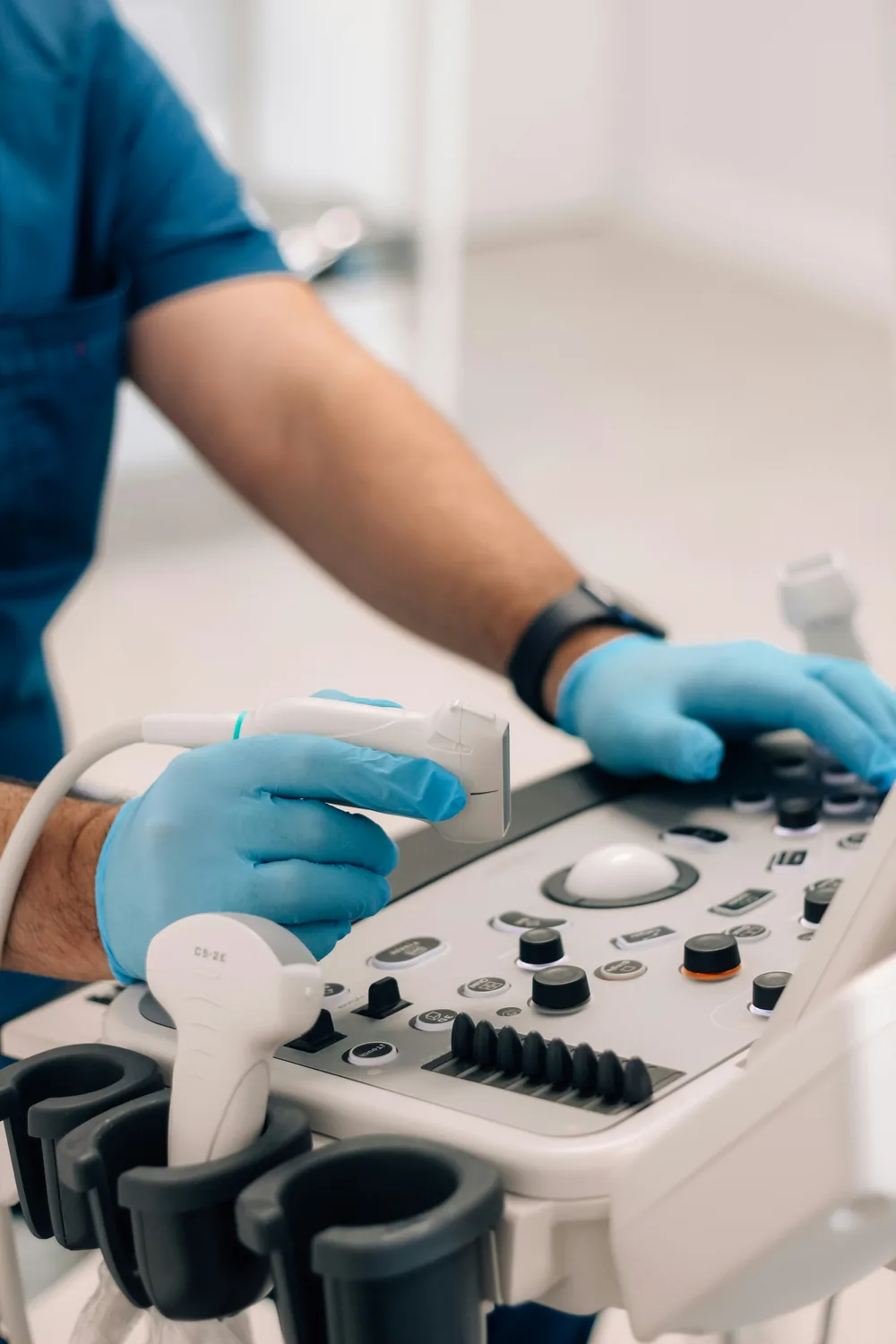
Diagnosis is made with a duplex ultrasound, a painless, non-invasive scan that visualizes blood flow in your leg veins and measures whether blood is refluxing backward through failed valves. The same study maps exactly which veins are affected, so Dr. Eduardo can build a precise, targeted treatment plan. Ultrasound documentation is also what insurers require to confirm that treatment is medically necessary rather than cosmetic.
See how coverage worksProgression
What happens if venous reflux is left untreated
Venous reflux is progressive. Because the pressure cycle reinforces itself, symptoms tend to advance in stages over time, which is why early treatment is so valuable.
- 01
Varicose veins & aching
Visible veins, heaviness and aching that worsen with standing.
- 02
Swelling & skin changes
Persistent leg and ankle swelling; itching, dryness and discoloration begin.
- 03
Stasis dermatitis & hardening
Brown discoloration and hardened, inflamed skin near the ankle (lipodermatosclerosis).
- 04
Venous leg ulcers
Open wounds near the ankle that are painful and slow to heal, the most advanced stage.
Not everyone progresses through every stage, and timelines vary widely between individuals. The point is simple: vein disease rarely improves on its own, and earlier treatment is generally easier and more effective.
The treatments
How venous reflux is treated
Once ultrasound confirms which vein is refluxing, the goal is to close or remove that vein so blood naturally reroutes through healthy ones. Modern options are office-based and minimally invasive:
Radiofrequency Ablation (RFA)
Catheter-delivered heat seals the faulty vein.
Learn moreVenaSeal
Medical adhesive closes the vein, no heat, no compression.
Learn moreVarithena
Polidocanol microfoam for tortuous veins.
Learn moreSclerotherapy
Injections for spider & smaller veins.
Learn moreMicrophlebectomy
Removes larger surface veins through tiny punctures.
Learn moreFAQ
Venous reflux questions
Can't find your answer here? Call us at (470) 742-1832 or book a consultation, we'll answer every question before you commit to anything.
Venous reflux (also called chronic venous insufficiency (CVI)) is a condition in which the one-way valves inside your leg veins weaken or fail, so blood flows backward and pools in the lower leg instead of returning to the heart. The resulting pressure is what causes varicose veins, swelling, aching and skin changes. It is a mechanical valve problem and is highly treatable.
Both are downstream effects of vein valve problems. When valves fail, pressure builds in the surface veins, large bulging veins become varicose veins, while tiny, dilated surface vessels appear as spider veins. Common risk factors include family history, prolonged standing, pregnancy, excess weight, age, and prior leg injury or clots.
Venous reflux itself is not immediately life-threatening, but it is progressive. Left untreated it can advance from mild varicose veins to chronic swelling, skin discoloration and hardening, and eventually venous leg ulcers, open wounds near the ankle that are slow to heal. Treating reflux early prevents these complications.
It is diagnosed with a duplex ultrasound, a painless, non-invasive scan that watches blood flow in your leg veins and measures whether blood is refluxing backward through failed valves. This same study maps which veins are affected so a precise treatment plan can be built.
The diseased vein can be permanently closed or removed, and the symptoms it caused typically resolve. Because reflux is a chronic tendency, new veins can develop over time (particularly if risk factors aren't addressed) so periodic surveillance helps catch any new reflux early. Treated veins themselves do not return.
Start your journey
Wondering if your symptoms are venous reflux?
A duplex ultrasound is the only way to know for sure. Book a vein consultation with Dr. Eduardo, close to home in Newnan.