

“Dr. Roger Eduardo is a great doctor!! He performed his own tests and did a colon resection and hiatal hernia repair. He fixed me!! He has a great personality and explains everything perfectly!!!”
Newnan, Georgia · Heartburn & Reflux Center
Stop renting relief with PPIs. Fix reflux at the source.
Acid reflux and GERD surgery in Newnan, Georgia
Daily Prilosec or omeprazole reduces acid and can control symptoms, but it cannot repair a hiatal hernia or a disrupted antireflux barrier. The reflux is still ongoing, it just isn't acidic anymore. Dr. Roger Eduardo, MD, FASMBS, offers definitive surgical care for GERD and hiatal hernia: fundoplication, LINX and hiatal hernia repair, close to home in south metro Atlanta.
The definitive-fix difference
A surgeon repairs the cause: not just the acid.
Dr. Roger Eduardo, MD
Board-Certified Bariatric & General Surgeon
Cleveland Clinic Florida fellowship · foregut & anti-reflux surgery · da Vinci robotic
★ 5.0 500+ reviews MD, FASMBS Board-Certified Surgeon (ABS) Yale University Emory University School of Medicine Harvard-Affiliated Surgical Residency (Beth Israel Deaconess) Cleveland Clinic Florida Bariatric Fellowship da Vinci Robotic Surgeon MBSAQIP. Director of Bariatrics, Piedmont Newnan Se habla español (más o menos)
★ 5.0 · 500+ patient reviews Board-Certified Surgeon (ABS) FASMBS da Vinci Robotic Surgery Cleveland Clinic Florida Fellowship Foregut & anti-reflux surgery Se habla español ★ 5.0 · 500+ patient reviews Board-Certified Surgeon (ABS) FASMBS da Vinci Robotic Surgery Cleveland Clinic Florida Fellowship Foregut & anti-reflux surgery Se habla español
Medically reviewed by Dr. Roger Eduardo, MD, FASMBS, Board-Certified General Surgeon. Last reviewed August 2026.
Book a consultation →About 20% of U.S. adults live with GERD: yet many treat it for years with daily medication instead of fixing the underlying valve.
Start here
What kind of reflux problem do you have?
Symptoms despite medication
Heartburn, regurgitation or nighttime reflux on a daily PPI.
GERD evaluation →A known hiatal hernia
Pressure, regurgitation, early fullness after small meals.
Hiatal hernia →Reflux after a sleeve
Symptoms that started or worsened after bariatric surgery.
Reflux after sleeve →Already had reflux surgery
Recurrent symptoms, a wrap that failed, or conflicting advice.
Second opinion →Medication vs mechanical repair
Acid control and reflux control are not always the same thing.
Proton-pump inhibitors are highly effective at reducing stomach acid and remain an important, appropriate long-term treatment for many people with GERD. What medication cannot do is repair a hiatal hernia or restore a disrupted antireflux barrier. The reflux is still ongoing, it just isn't acidic anymore. When reflux is objectively confirmed and anatomy is contributing, a procedure can address what medication cannot. The workup is what tells you which situation you are in.
Medication treats acid
For many people PPIs control symptoms effectively and may remain the right long-term treatment. They reduce acid; they do not change the anatomy. The reflux is still ongoing, it just isn't acidic anymore, which is why regurgitation and nighttime reflux can persist on a full dose.
Testing identifies the mechanism
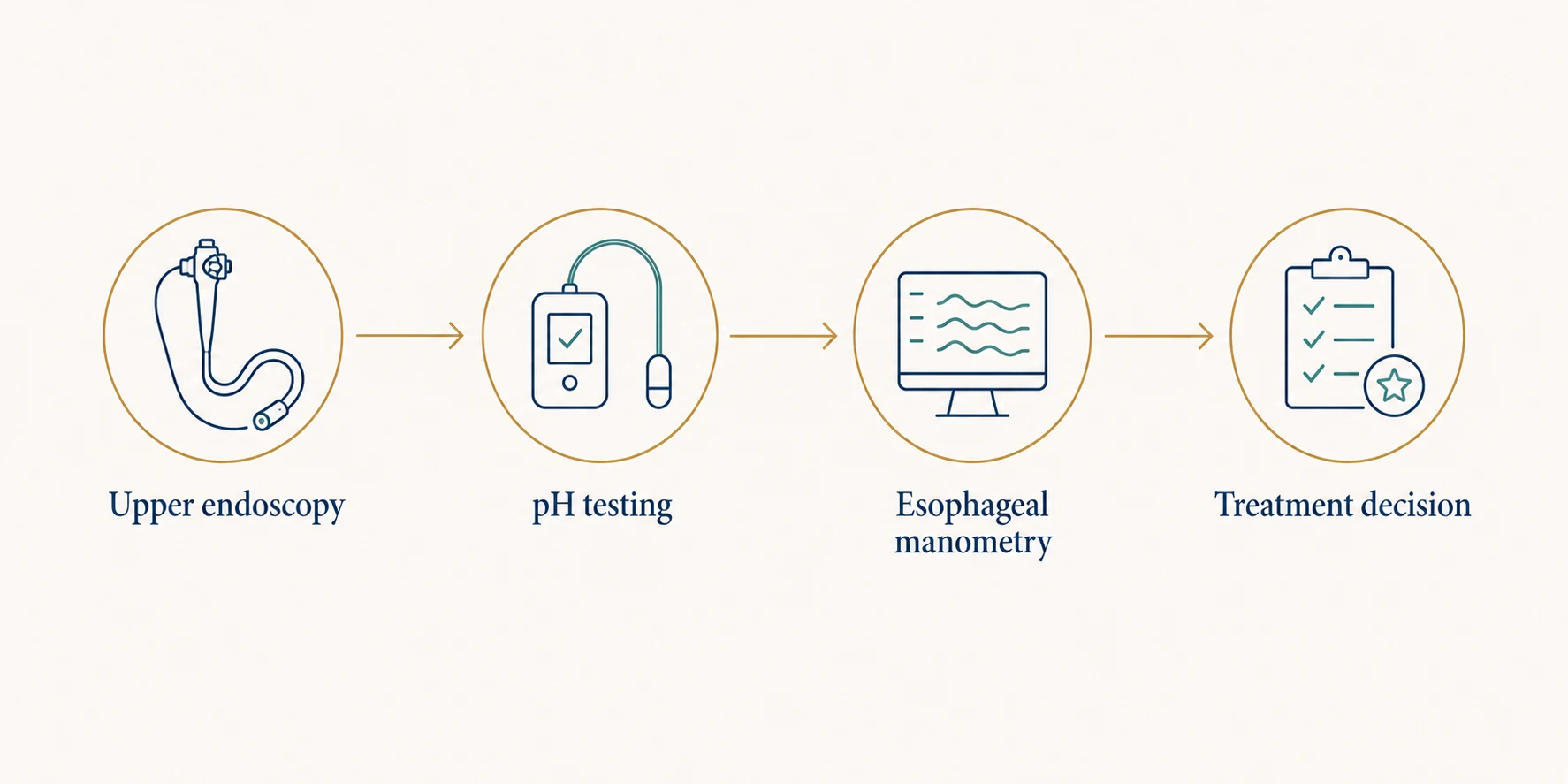
Endoscopy, pH testing and esophageal motility testing determine whether symptoms truly represent pathologic reflux, and whether anatomy is involved. Guidelines call for that objective confirmation before any invasive antireflux treatment.
Procedures treat selected anatomy
Fundoplication, hiatal hernia repair and TIF each suit different patients, with LINX coming soon. In appropriately selected patients a procedure can reduce or eliminate the need for daily medication, though some patients do resume it over time.
When is it time?
When should you consider surgery for reflux?
Surgery becomes the right conversation when PPIs no longer control your symptoms, when you'd rather not take acid medication for the rest of your life, when a hiatal hernia is found, or when reflux has caused complications such as Barrett's esophagus. An objective workup (endoscopy and pH testing) confirms whether a definitive repair is appropriate.
Signs it's more than heartburn
- ◆PPIs no longer fully control your symptoms.
- ◆Daily regurgitation of food or acid, especially at night.
- ◆You've been told you have a hiatal hernia.
- ◆Reflux complications: esophagitis, stricture, or Barrett's esophagus.
- ◆You simply don't want to take acid medication for life.
Conditions we treat
The reflux conditions behind chronic heartburn
GERD
Gastroesophageal reflux disease, chronic acid reflux that can damage the esophagus over time. Learn the symptoms, causes, and when medication isn't enough.
Learn about GERDHiatal Hernia
The hidden mechanical cause of chronic reflux: part of the stomach slips through the diaphragm and breaks the anti-reflux barrier. Often repairable in one procedure.
Learn about hiatal herniaSilent Reflux (LPR)
Reflux that reaches the throat and voice box, not the chest. The chronic cough, hoarseness, and throat clearing that nobody connects to acid. Often missed for years.
Learn about silent refluxBarrett's Esophagus
The change in the esophageal lining that years of untreated reflux can cause, and why it deserves surveillance and durable reflux control.
Learn about Barrett'sTreatment options
Surgical options that fix reflux at the source
Dr. Eduardo tailors the repair to your anatomy and goals. Explore each option to learn how it works, who's a candidate, and what recovery looks like.
Nissen & Toupet Fundoplication
The long-established surgical standard
Rebuilds your anti-reflux valve with a full (Nissen) or partial (Toupet) wrap.
Learn moreLINX (Magnetic Sphincter Augmentation)
Coming soon to Omnia Health
A ring of magnetic beads reinforces the lower esophageal valve while preserving normal belching.
Learn moreTIF + Hiatal Hernia Repair
A two-specialist, incisionless approach
Dr. Eduardo repairs the hiatal hernia, and our gastroenterology partners perform the incisionless fundoplication.
Learn moreHiatal Hernia Repair
Fixing the mechanical root cause
Laparoscopic and robotic repair of the hernia that lets acid escape, often paired with an anti-reflux procedure.
Learn moreChoosing a procedure
Fundoplication vs. TIF vs. LINX: at a glance
Three proven ways to rebuild your anti-reflux barrier. Dr. Eduardo helps you choose based on your anatomy, symptoms, and how you want to feel afterward.
| Comparison criteria | Nissen / Toupet Fundoplication | TIF + Hiatal Hernia Repair | LINX |
|---|---|---|---|
| Best for | Severe GERD, a larger hiatal hernia, or motility concerns (Toupet). | An incisionless option, usually after a hiatal hernia repair. | Moderate GERD where preserving normal belching and vomiting matters. |
| How it works | Wraps the top of the stomach to rebuild the valve (full 360° or partial 270°). | Incisionless fundoplication through the mouth, plus a laparoscopic hiatal hernia repair. | A ring of magnetic beads reinforces the lower esophageal sphincter. |
| Approach | Laparoscopic or robotic, through a few small incisions. | Transoral (no external incisions) for the wrap; small incisions for the hernia repair. | Laparoscopic, typically outpatient. |
| Hospital stay | Same day or overnight. | Outpatient or overnight. | Outpatient or overnight. |
| Reversible? | Reconstructs the valve; not designed to be undone. | No implant; can be revised later if needed. | No change to the stomach; designed to be removable. |
| Learn more | Details | Details | Details |
Recovery and hospital-stay figures are general guidance, not a promise, your plan depends on your anatomy and overall health. Individual results vary.
Insurance
Usually covered when medically necessary
When reflux is documented by pH testing and other objective studies, anti-reflux surgery and hiatal hernia repair are typically covered by most commercial and Medicare plans. Our team handles pre-authorization.
Verify your coverageCost
Transparent self-pay pricing
For patients without coverage, we explain self-pay pricing clearly and what it includes, before you commit to anything.
See financingThe workup
We test before we treat
Endoscopy, pH monitoring and manometry document medical necessity and confirm the right procedure for you, not a one-size-fits-all referral.
See the diagnosticsFree download, 6 pages
The reflux guide we wish every patient read first
Why a daily pill can control your acid and still leave you refluxing, the four tests that actually decide your treatment, every operation compared with its honest trade-off, and what to do about Barrett's esophagus or reflux that started after a gastric sleeve. Every figure cited to a published study or a society guideline.
Get the free reflux guide
No obligation. Downloading does not create a doctor patient relationship.
Reflux & weight
Severe GERD with obesity?
Excess weight worsens reflux and hiatal hernias. For patients who also qualify for weight-loss surgery, gastric bypass is often the preferred bariatric procedure for severe GERD, it resolves reflux in most patients while treating obesity.
Explore bariatric surgeryOne foregut surgeon
Concurrent hiatal hernia repair
Because Dr. Eduardo is a foregut surgeon, a hiatal hernia found during bariatric surgery can be repaired in the same operation, one expert, one anesthesia, one recovery.
About hiatal hernia repairBariatric & foregut, one surgeon
Reflux after a gastric sleeve?
New or worsening heartburn after a sleeve is common, mechanical, and fixable, and a fundoplication is not the answer once the fundus is gone. Because Dr. Eduardo is both bariatric and foregut trained, one surgeon can order the right workup, read it, and perform whichever operation the results point to, so you are not passed back and forth between practices.
Reflux FAQ
Heartburn & reflux questions
Can't find your answer here? Call us at (470) 742-1832 or book a consultation, we'll answer every question before you commit to anything.
Surgery is typically considered when: (1) medications like PPIs no longer control your symptoms, (2) you are experiencing side effects from long-term PPI use, (3) a structural problem such as a hiatal hernia is identified, or (4) you have complications from untreated reflux such as Barrett's esophagus. A thorough evaluation helps determine whether surgery is the right next step.
A hiatal hernia occurs when part of the stomach pushes up through the diaphragm into the chest. This disrupts the natural anti-reflux barrier at the lower esophageal sphincter, allowing stomach acid to flow backward into the esophagus. Hiatal hernia repair, often combined with fundoplication or LINX placement, corrects this mechanical problem.
Nissen fundoplication wraps the top of the stomach around the lower esophagus to create a new valve, the long-established surgical standard with decades of outcome data. The LINX device is a small ring of magnetic beads placed around the lower esophageal sphincter to reinforce it without altering stomach anatomy. LINX generally has a faster recovery and is preferred for patients with milder reflux or those who want to preserve the ability to belch and vomit normally.
Both fundoplication and LINX placement typically take about 1 to 1.5 hours. Both are performed laparoscopically, with most patients going home after an overnight stay. Most patients resume normal activities within 1–2 weeks. A soft-food diet is followed for the first 2–4 weeks.
Most patients are able to stop or significantly reduce PPI use after successful surgery. Complete cessation depends on your individual anatomy and how well the repair holds over time. Dr. Eduardo will manage your medication taper as part of your post-operative follow-up.
Yes, when medically necessary (documented by pH testing and other objective studies), GERD surgery and hiatal hernia repair are typically covered by most commercial and Medicare plans. Our team will handle the pre-authorization process and obtain the required documentation.
This is common. Gastric bypass is actually the preferred bariatric procedure for patients with significant GERD, as it naturally reduces acid production and eliminates reflux in most patients. For sleeve gastrectomy patients who develop new or worsening reflux post-operatively, conversion to gastric bypass resolves reflux in the vast majority of cases.
Your surgeon
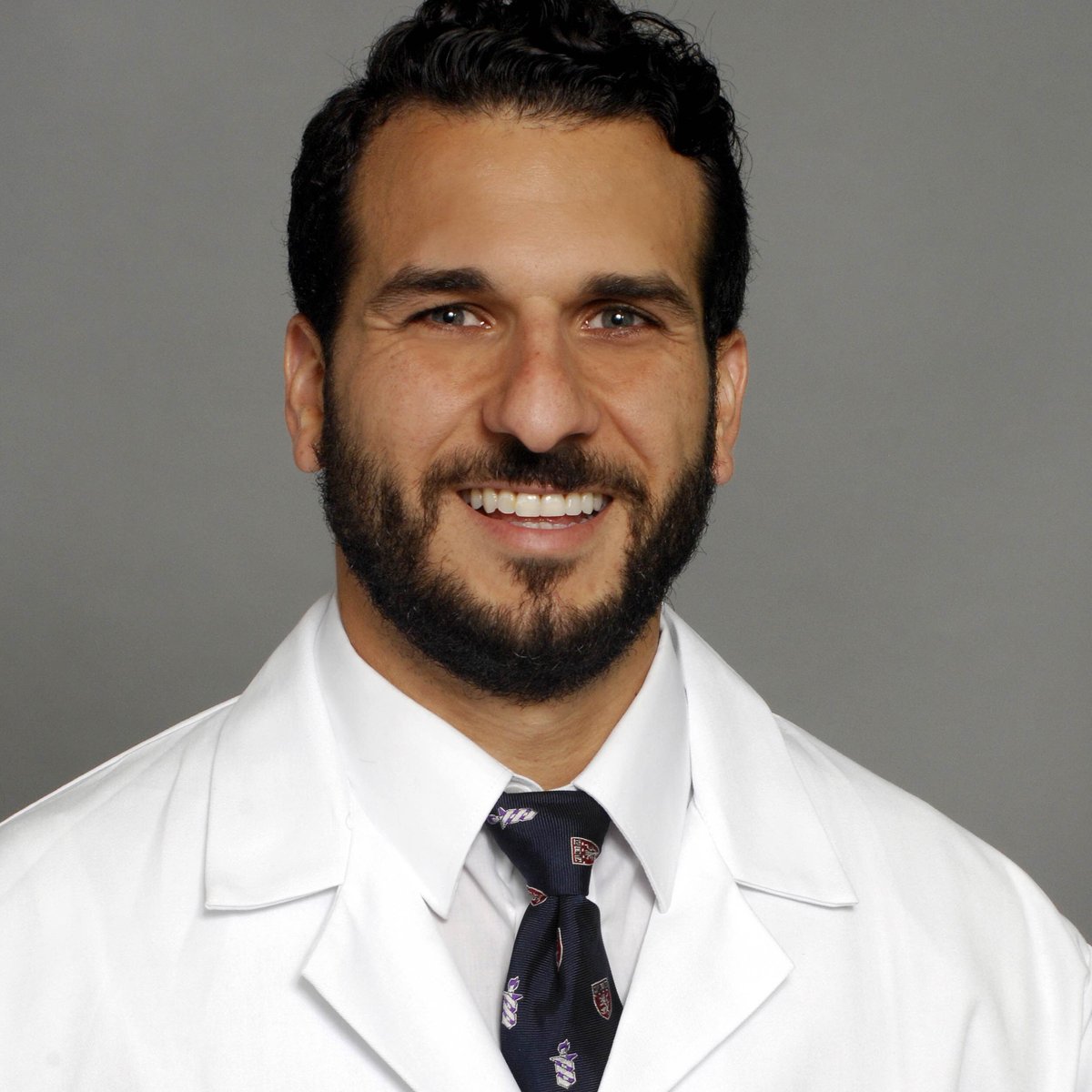
Dr. Roger Eduardo, MD
Board-Certified Bariatric & General Surgeon
Fellowship-trained at Cleveland Clinic Florida and board-certified in general surgery, Dr. Eduardo's expertise spans the full foregut, acid reflux surgery, hiatal hernia repair, fundoplication and advanced endoscopy. His philosophy: fix the cause, not just the symptom.
Meet Dr. EduardoService area
Serving south metro Atlanta
Also serving west Georgia and the wider south metro, an easy highway drive from Newnan:
Patient Stories
What our patients say.
Real patients who found lasting relief from GERD and hiatal hernia, in their own words.
Read more patient reviews on Google
Continuity of care
The physician you choose is the physician who stays involved.
One physician
Dr. Eduardo evaluates you, builds the plan, performs the procedure and sees you afterwards. Not a coordinator, not a rotating provider, not whoever is covering that week.
One connected practice
Medical weight loss, bariatric surgery, reflux, hernias and vein care do not live in separate silos here. When one problem turns out to be caused by another, nobody has to be referred out to find that out.
No revolving door
Your care is not handed between a visiting surgeon, a franchise program and a call centre in another state. The same person is accountable at the start and at the end.
Start your journey
Ready to stop renting relief?
Book a consultation with Dr. Eduardo and find out whether a definitive reflux repair is right for you.