
Treatment
VenaSeal. Medical Adhesive Vein Closure in Newnan, GA
Medically reviewed by Dr. Roger Eduardo, MD, FASMBS, Board-Certified General Surgeon. Last reviewed August 2026.
Book a consultation →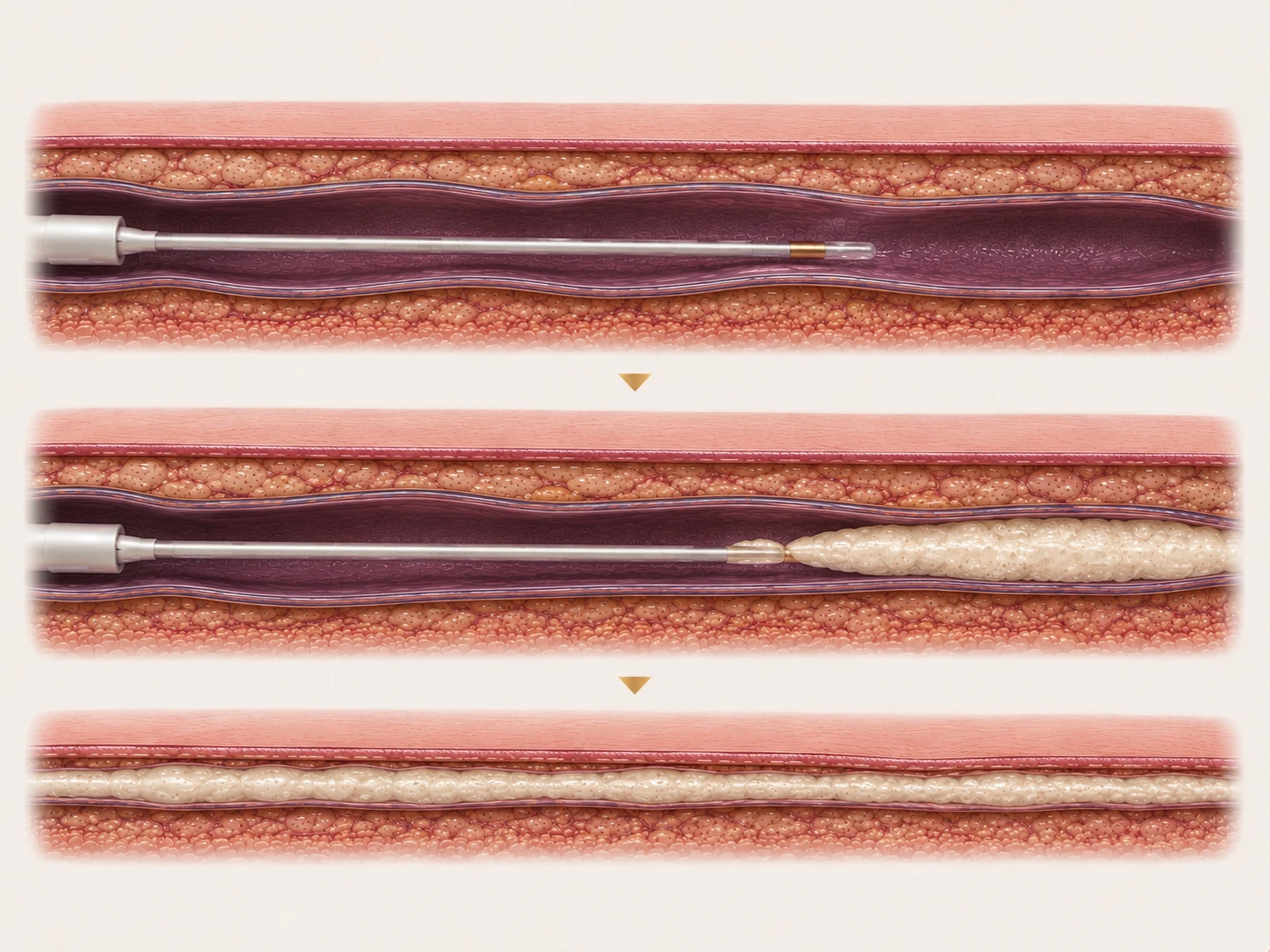
What is VenaSeal?
VenaSeal is a minimally invasive treatment that closes a refluxing vein using a medical-grade adhesive instead of heat. Because no thermal energy is involved, it needs little numbing, causes minimal bruising, and typically requires no compression stockings afterward, which makes it one of the most comfortable options for treating venous reflux.
How it works
Under ultrasound guidance, Dr. Eduardo delivers a small, precise amount of medical adhesive through a thin catheter into the diseased vein. The adhesive seals the vein walls together, and blood immediately reroutes through healthy veins. With no heat, there's no need for the multiple tumescent-anesthesia injections used in thermal ablation, usually just a single numbing injection at the access point.
Conditions it treats
VenaSeal treats venous reflux in the superficial saphenous veins that cause varicose veins, leg heaviness, aching and swelling. It can be combined with microphlebectomy or sclerotherapy for any remaining surface veins.
What to expect
VenaSeal is office-based and typically takes about 20–30 minutes. You're awake and comfortable, you walk out the same hour, and you resume normal activity right away, usually without compression stockings, and avoiding strenuous exercise for a short period as advised.
Results & effectiveness
VenaSeal has demonstrated high reported vein-closure rates in clinical studies, with most patients experiencing relief of heaviness, aching and swelling (source: published clinical studies of medical-adhesive closure). Individual results vary.
VenaSeal vs. RFA vs. Varithena
RFA uses heat and requires tumescent anesthesia and short-term compression; VenaSeal uses adhesive with neither. Varithena uses microfoam and excels on twisting veins. Dr. Eduardo matches the method to your anatomy and preferences.
Insurance coverage
When ultrasound documents reflux and you have medically significant symptoms, VenaSeal is typically covered, though specifics vary by plan. See how coverage works →
Risks & considerations
Because VenaSeal uses a medical adhesive rather than heat, it needs no tumescent anesthesia and carries no thermal nerve-injury risk. The trade-off is specific to the glue: a phlebitis-like inflammatory reaction over the treated vein occurs in a minority of patients, usually settling with anti-inflammatories, and true hypersensitivity to cyanoacrylate is uncommon but real. Other risks shared with all vein ablation include bruising, tenderness along the treated vein, skin infection, and deep vein thrombosis or endovenous heat-induced thrombus extending toward the deep system, which is why we scan you afterward.
When it is not the right choice
VenaSeal is not used in acute deep vein thrombosis or superficial thrombophlebitis, in known cyanoacrylate allergy, in active infection at the treatment site, or in pregnancy. Significant peripheral arterial disease changes the plan. Dr. Eduardo reviews your full history and your duplex ultrasound before recommending any treatment.
FAQ
VenaSeal FAQ
Can't find your answer here? Call us at (470) 742-1832 or book a consultation, we'll answer every question before you commit to anything.
VenaSeal uses a small amount of a medical-grade adhesive delivered through a thin catheter directly into the refluxing vein. The adhesive seals the vein walls together so blood reroutes through healthy veins. Because it uses no heat, there's no need for the tumescent anesthesia required by thermal procedures.
Typically no. One of VenaSeal's main advantages is that it usually does not require post-procedure compression stockings, unlike heat-based ablation. Dr. Eduardo will confirm what's right for your specific case, but most VenaSeal patients skip the stockings.
Many patients find it so. Because VenaSeal uses no thermal energy, it requires far less numbing, usually just a single injection at the access point rather than the multiple tumescent injections used in heat-based ablation. Patients often report minimal bruising and a comfortable experience.
The procedure is office-based and typically takes about 20–30 minutes. Most patients walk out the same hour and resume normal activity right away, avoiding strenuous exercise for a short period as advised. Recovery is generally quick and comfortable.
When ultrasound documents venous reflux and you have medically significant symptoms, VenaSeal is typically covered by most major plans and Medicare, though coverage specifics vary by plan. Our team verifies your benefits and handles pre-authorization before scheduling.
Start your journey
Curious if VenaSeal is right for you?
It begins with a duplex ultrasound and a conversation about your options. Book a vein consultation with Dr. Eduardo in Newnan.