
Condition & Repair
Hiatal Hernia: The Hidden Cause of Chronic Heartburn
Medically reviewed by Dr. Roger Eduardo, MD, FASMBS, Board-Certified General Surgeon. Last reviewed August 2026.
Book a consultation →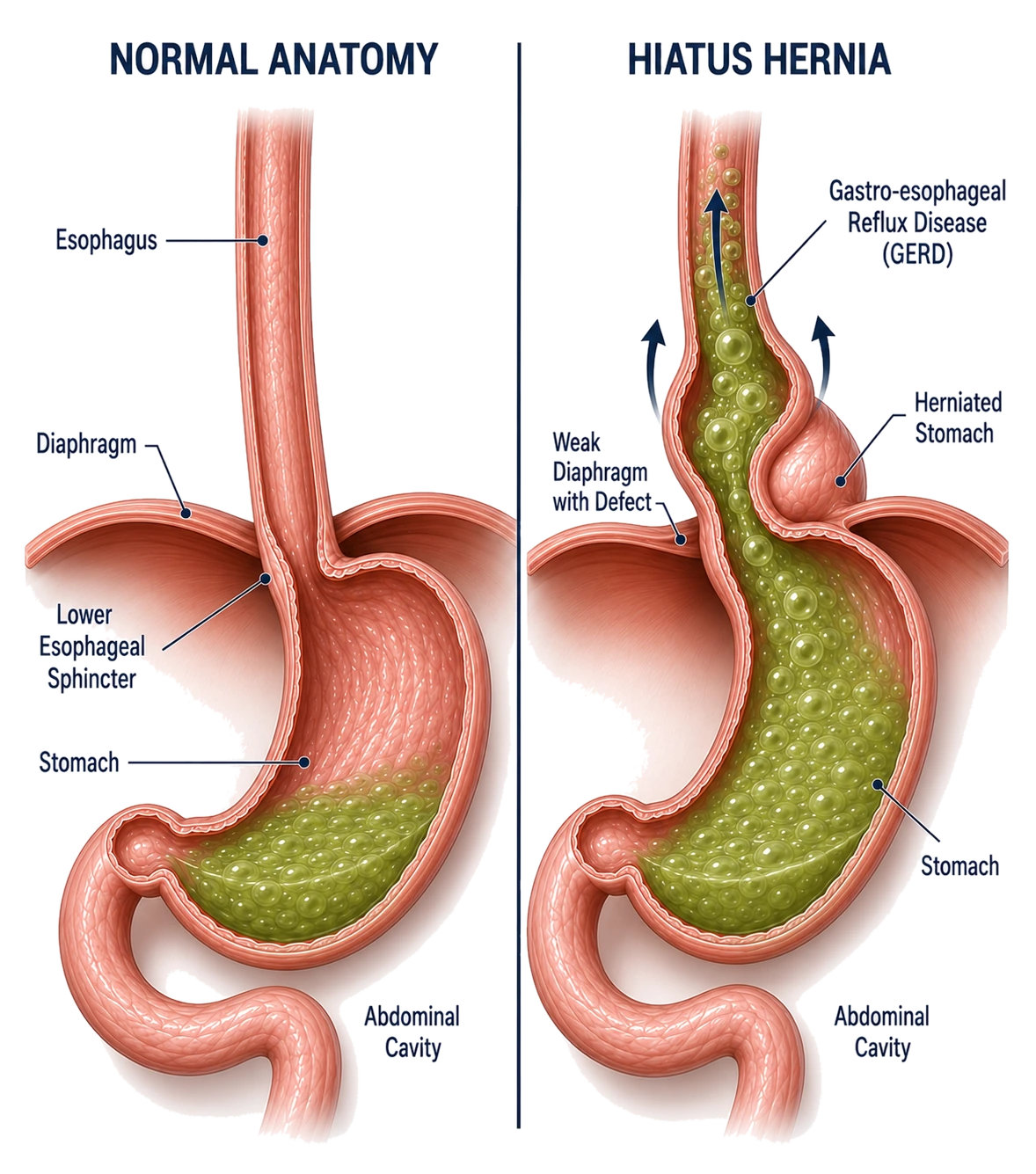
What is a hiatal hernia?
A hiatal hernia is when part of the stomach slides up through the hiatus, the small opening in the diaphragm where the esophagus passes from the chest into the abdomen. By pulling the stomach and lower esophageal sphincter out of position, it breaks the natural barrier that keeps acid down. That's why a hiatal hernia is one of the most common mechanical causes of chronic GERD, and why fixing it often fixes the reflux.
Types of hiatal hernia
- ◆Type I, sliding (most common): the junction of the stomach and esophagus slides up and down through the hiatus. Strongly associated with reflux.
- ◆Types II–IV, paraesophageal: part of the stomach pushes up alongside the esophagus. Larger paraesophageal hernias can cause obstruction-type symptoms and usually warrant repair.
How it causes reflux
The lower esophageal sphincter and the diaphragm normally reinforce each other at the same level to keep acid down. A hiatal hernia separates them, so even a normally functioning valve loses its backup, and acid escapes more easily. Restoring the anatomy is the key to lasting relief, which is why repair is usually paired with an anti-reflux procedure.
When is repair needed?
Small, symptom-free sliding hernias are often simply monitored. Repair is considered when a hernia drives reflux that medication can't control, causes swallowing or chest symptoms, or is a large paraesophageal hernia at risk of complications. An objective workup confirms the picture before any decision.
How repair fixes reflux
Dr. Eduardo returns the stomach to the abdomen, tightens the diaphragmatic opening, and rebuilds the anti-reflux valve, with a fundoplication or LINX. He avoids mesh whenever possible. For very large hernias or weak diaphragmatic tissue where primary repair won't hold, he uses absorbable biologic mesh only, never permanent mesh around the esophagus.
Laparoscopic & robotic repair
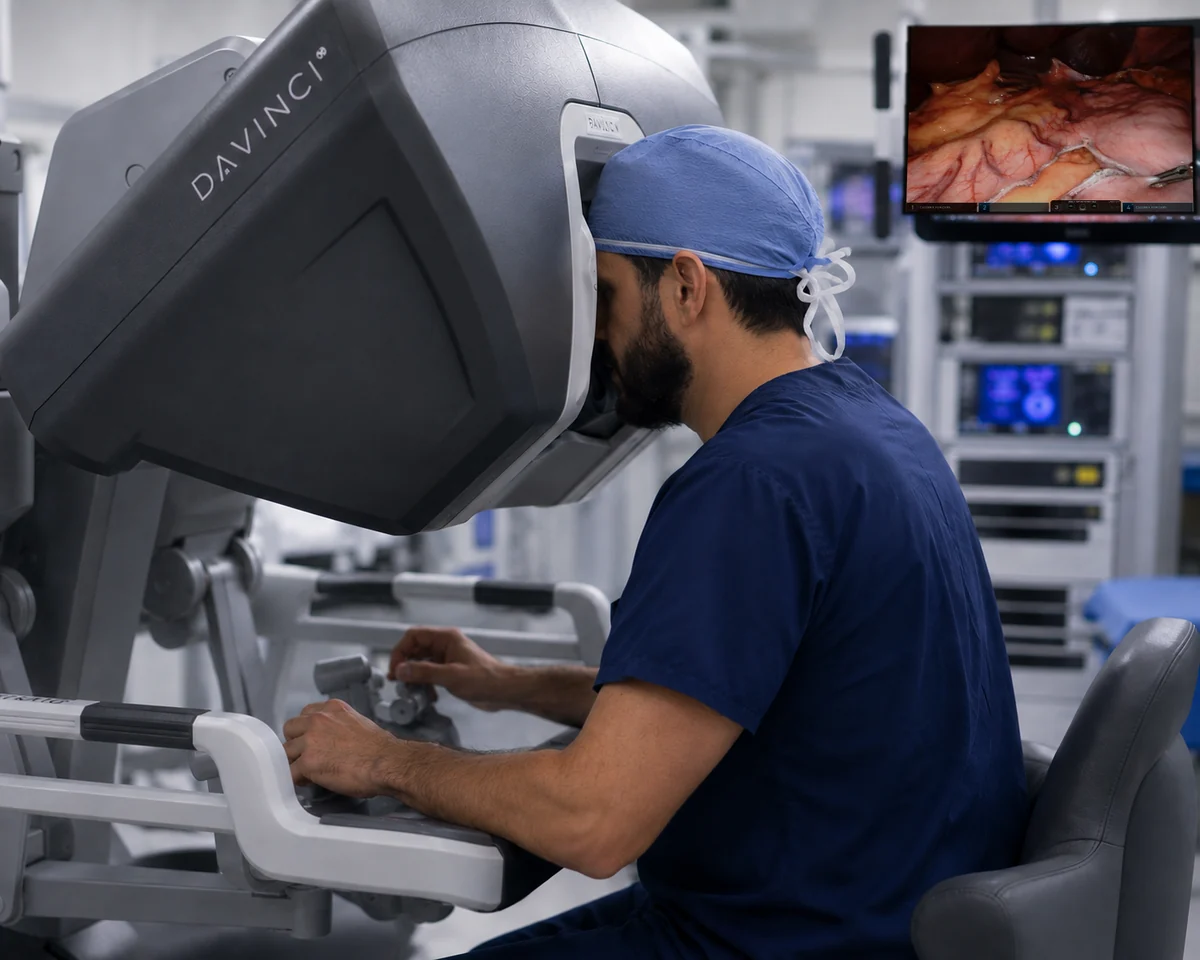
Repair is performed through several small incisions using laparoscopic or da Vinci robotic technique, meaning less pain and a faster recovery than open surgery. Most patients go home after an overnight stay and resume normal activity within one to two weeks, following a soft-food diet at first.
Weight, hernia & reflux
The obesity–hernia–reflux connection
Excess abdominal weight raises pressure on the stomach, contributing to hiatal hernias and reflux. For patients who also qualify for weight-loss surgery, Dr. Eduardo (a foregut and bariatric surgeon) can repair a hiatal hernia during the same operation. Gastric bypass is also the preferred bariatric procedure for patients with significant GERD.
FAQ
Hiatal hernia questions
Can't find your answer here? Call us at (470) 742-1832 or book a consultation, we'll answer every question before you commit to anything.
A hiatal hernia occurs when part of the stomach pushes up through the hiatus (the opening in the diaphragm where the esophagus passes) into the chest. This displaces the lower esophageal sphincter and weakens the natural anti-reflux barrier, which is why hiatal hernias are a leading mechanical cause of chronic GERD.
Small hiatal hernias often cause no symptoms. Larger ones commonly cause heartburn, regurgitation, chest discomfort, difficulty swallowing, a feeling of fullness after small meals, and sometimes shortness of breath. Large paraesophageal hernias can occasionally cause more serious symptoms and warrant timely evaluation.
Normally the lower esophageal sphincter and the diaphragm work together at the same level to keep stomach acid down. A hiatal hernia separates these two barriers, so acid escapes upward more easily. Repairing the hernia restores the anatomy, which is why hernia repair, often combined with an anti-reflux procedure, is so effective for reflux.
Repair is performed laparoscopically or with da Vinci robotic assistance through several small incisions. Dr. Eduardo returns the stomach to the abdomen and tightens the diaphragmatic opening, typically adding a fundoplication or LINX to rebuild the anti-reflux valve. Most patients go home after an overnight stay.
Most repairs are durable. Recurrence is more common with very large or paraesophageal hernias. Dr. Eduardo avoids mesh whenever possible. When the hernia is very large or the diaphragmatic tissue is too weak for a primary repair, he uses absorbable biologic mesh, never permanent mesh around the esophagus. Technique and recurrence risk are discussed individually before surgery.
Start your journey
Could a hiatal hernia be behind your reflux?
Book a consultation with Dr. Eduardo to find out, and learn whether a single repair can end your heartburn.