
Treatment
Sclerotherapy for Spider Veins in Newnan, GA
Medically reviewed by Dr. Roger Eduardo, MD, FASMBS, Board-Certified General Surgeon. Last reviewed August 2026.
Book a consultation →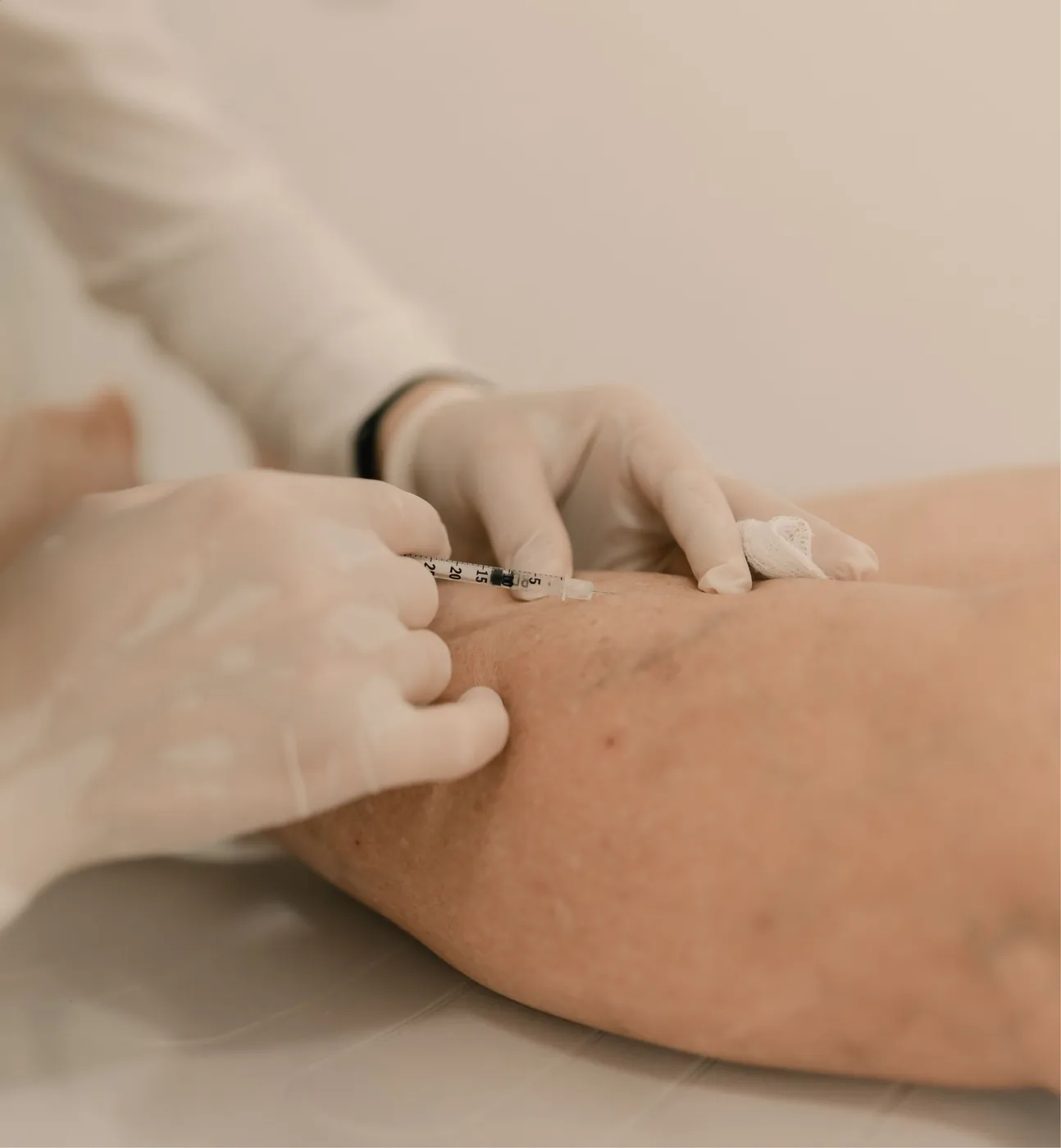
What is sclerotherapy?
Sclerotherapy is the established treatment for spider veins and small varicose branches. A sclerosing solution (in liquid or foam form) is injected directly into the targeted vein, causing it to collapse, seal, and gradually fade over the following weeks. It's quick, performed in the office, and requires essentially no downtime.
Important coverage note
Cosmetic spider vein treatment is generally not covered by insurance.
Sclerotherapy of spider veins that aren't causing medically significant symptoms is considered cosmetic and is typically a self-pay service. However, if your spider veins are fed by underlying venous reflux documented on ultrasound, treatment of that underlying reflux may be covered. We'll help you understand the distinction and verify your benefits.
How vein coverage worksHow it works
Using a fine needle, Dr. Eduardo injects a small amount of sclerosing solution into each targeted vein. The solution irritates the vein's inner lining, causing the walls to stick together and seal. Blood reroutes through healthy vessels, and the treated vein is gradually reabsorbed and fades from view over several weeks.
Conditions it treats
Sclerotherapy is ideal for cosmetic spider veins and small reticular (feeder) veins. When larger or deeper veins are involved, a related technique called Varithena microfoam or catheter-based ablation may be more appropriate. Spider veins driven by deeper reflux are best addressed by treating the underlying source first.
What to expect
Each session takes about 20–30 minutes with no real downtime. You'll feel a brief stinging or cramping with each injection. Afterward you wear compression as advised and avoid strenuous exercise and sun exposure on the treated area for a short period. Most patients need more than one session for the best result, spaced about four to eight weeks apart.
Results & effectiveness
Treated spider veins typically fade gradually over several weeks to a few months. Temporary darkening or bruising at injection sites is normal. Sclerotherapy doesn't prevent new spider veins from forming over time, so periodic touch-up sessions are common. Individual results vary.
Risks & considerations
Sclerotherapy is well tolerated, but the cosmetic risks matter because the goal is usually cosmetic. Brown or tan skin staining along the treated vein (hyperpigmentation) is the most common, usually fading over months though occasionally persisting. Matting, a blush of fine new vessels near the treated area, occurs in a minority of patients. Other risks are bruising, temporary itching or welts, and, rarely, a small skin ulcer if solution escapes the vein. Allergic reaction and deep vein thrombosis are rare.
When it is not the right choice
Sclerotherapy is not used in acute deep vein thrombosis or superficial thrombophlebitis, in known allergy to the sclerosant, in active infection at the treatment site, or in pregnancy. Significant peripheral arterial disease changes the plan. Treating surface veins before the underlying reflux is addressed tends to fail, which is why Dr. Eduardo scans you first.
FAQ
Sclerotherapy FAQ
Can't find your answer here? Call us at (470) 742-1832 or book a consultation, we'll answer every question before you commit to anything.
Sclerotherapy treats spider veins and small varicose branches by injecting a sclerosing solution directly into the vein. The solution irritates the vein lining, causing it to collapse and seal; over the following weeks the vein fades and is absorbed by your body. Both liquid and foam forms are used depending on vein size.
Generally no when it's purely cosmetic. Sclerotherapy for spider veins that aren't causing medically significant symptoms is considered cosmetic and is typically not covered by insurance. If your spider veins stem from underlying venous reflux documented on ultrasound, the treatment of that underlying reflux may be covered, our team will help you understand the distinction and verify your specific benefits.
Most patients need more than one session for the best cosmetic result, with treatments commonly spaced about four to eight weeks apart. The exact number depends on how many veins are being treated and how your veins respond. Dr. Eduardo will outline a realistic plan at your visit.
Each injection causes a brief stinging or cramping sensation that passes quickly; most patients tolerate it well. Sessions take about 20–30 minutes and require essentially no downtime; you can return to normal activity the same day, wearing compression as advised and avoiding strenuous exercise and sun exposure on the treated area for a short period.
Treated spider veins typically fade gradually over several weeks to a few months as the vein is reabsorbed. Some temporary darkening or bruising at injection sites is normal and resolves over time. Individual results vary.
Start your journey
Ready to address those spider veins?
Book a consultation with Dr. Eduardo in Newnan, and find out whether yours are purely cosmetic or a sign of treatable underlying reflux.