
Treatment
Radiofrequency Ablation (RFA) in Newnan, GA
Medically reviewed by Dr. Roger Eduardo, MD, FASMBS, Board-Certified General Surgeon. Last reviewed August 2026.
Book a consultation →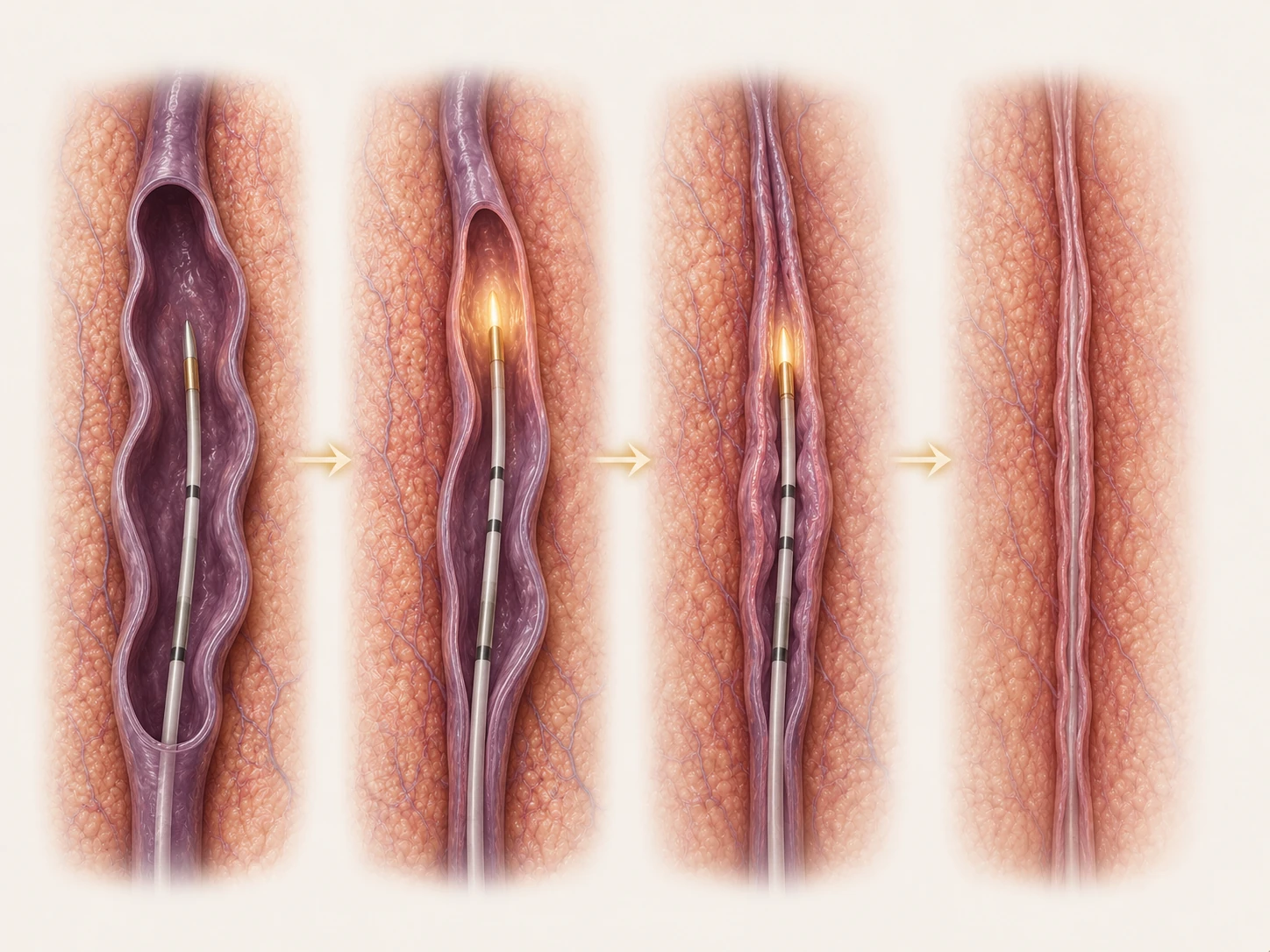
What is radiofrequency ablation?
Radiofrequency ablation (RFA) is a minimally invasive, office-based treatment that closes a diseased vein using gentle, catheter-delivered heat. It's the thermal option for treating venous reflux in a saphenous vein, a modern replacement for old-fashioned vein stripping. Once the faulty vein is sealed, blood naturally reroutes through healthy veins and your symptoms typically improve.
How it works
Under ultrasound guidance, Dr. Eduardo places a thin catheter inside the refluxing vein and numbs the surrounding tissue with local tumescent anesthesia. The catheter delivers controlled radiofrequency energy that heats and collapses the vein wall, sealing it shut. The vein is then gradually absorbed by your body over the following weeks.
Conditions it treats
RFA is used to treat venous reflux in the large superficial veins (commonly the great saphenous vein) that drive varicose veins, leg heaviness, aching and swelling. It's frequently combined with microphlebectomy or sclerotherapy to address remaining surface veins.
What to expect
RFA is done in the office and typically takes about ~30 minutes. You're awake and comfortable throughout, and you walk out the same hour. Most patients return to normal daily activity right away, avoiding strenuous exercise and heavy lifting for about one to two weeks. Compression stockings are usually worn for a short period afterward.
Results & effectiveness
RFA has a long, well-established track record with high reported vein-closure rates in the published literature, and most patients experience meaningful relief of heaviness, aching and swelling (source: published vascular surgery literature). Individual results vary.
RFA vs. VenaSeal
Both close a refluxing vein. RFA uses heat and requires local tumescent anesthesia and a short period of compression afterward; VenaSeal uses a medical adhesive with no heat and typically no compression. RFA has the longer track record; VenaSeal tends to be more comfortable. Dr. Eduardo will help you choose based on your anatomy and preferences.
Insurance coverage
When ultrasound documents reflux and you have medically significant symptoms, RFA is typically covered by most plans and Medicare. See how coverage works →
Risks & considerations
Radiofrequency ablation is a thermal treatment, so its risk profile is heat-related. The most common effects are bruising, tightness or a pulling sensation along the treated vein, and temporary numbness or tingling if the saphenous or sural nerve runs close to the vein being treated. Skin burn is rare with modern catheters and tumescent anesthesia. Deep vein thrombosis and endovenous heat-induced thrombus extending toward the deep system are uncommon but are the reason we repeat a duplex ultrasound after treatment.
When it is not the right choice
RFA is not used in acute deep vein thrombosis or superficial thrombophlebitis, in active infection at the treatment site, or in pregnancy. Significant peripheral arterial disease, or a vein lying immediately against the skin or a nerve, may make a different treatment safer. Dr. Eduardo reviews your full history and your duplex ultrasound before recommending any treatment.
FAQ
Radiofrequency ablation FAQ
Can't find your answer here? Call us at (470) 742-1832 or book a consultation, we'll answer every question before you commit to anything.
RFA uses a thin catheter placed inside the diseased vein under ultrasound guidance. The catheter delivers controlled radiofrequency heat that causes the vein wall to collapse and seal shut. Blood then naturally reroutes through healthy nearby veins. The sealed vein is gradually absorbed by the body over time.
RFA is performed under local tumescent anesthesia, which numbs the area around the vein. Most patients feel pressure or mild warmth during the procedure rather than pain. Any post-procedure discomfort is usually mild and managed with over-the-counter pain relievers, and most people are walking immediately afterward.
The procedure itself typically takes about ~30 minutes in the office. Most patients walk out the same hour and return to normal daily activity right away, with a recommendation to avoid strenuous exercise and heavy lifting for roughly one to two weeks. Compression stockings are usually worn for a short period afterward.
RFA has a long, well-established track record for closing refluxing saphenous veins, with high reported closure rates in the published literature. Individual results vary. Dr. Eduardo will discuss expected outcomes for your specific anatomy at your consultation.
When a duplex ultrasound documents venous reflux and you have medically significant symptoms, RFA is typically covered by most major plans and Medicare. Cosmetic-only treatment is generally not covered. Our team verifies your benefits and handles pre-authorization before scheduling.
Start your journey
Is RFA right for your veins?
It starts with a duplex ultrasound and a conversation. Book a vein consultation with Dr. Eduardo in Newnan.