
Treatment
Varithena (Polidocanol Microfoam) in Newnan, GA
Medically reviewed by Dr. Roger Eduardo, MD, FASMBS, Board-Certified General Surgeon. Last reviewed August 2026.
Book a consultation →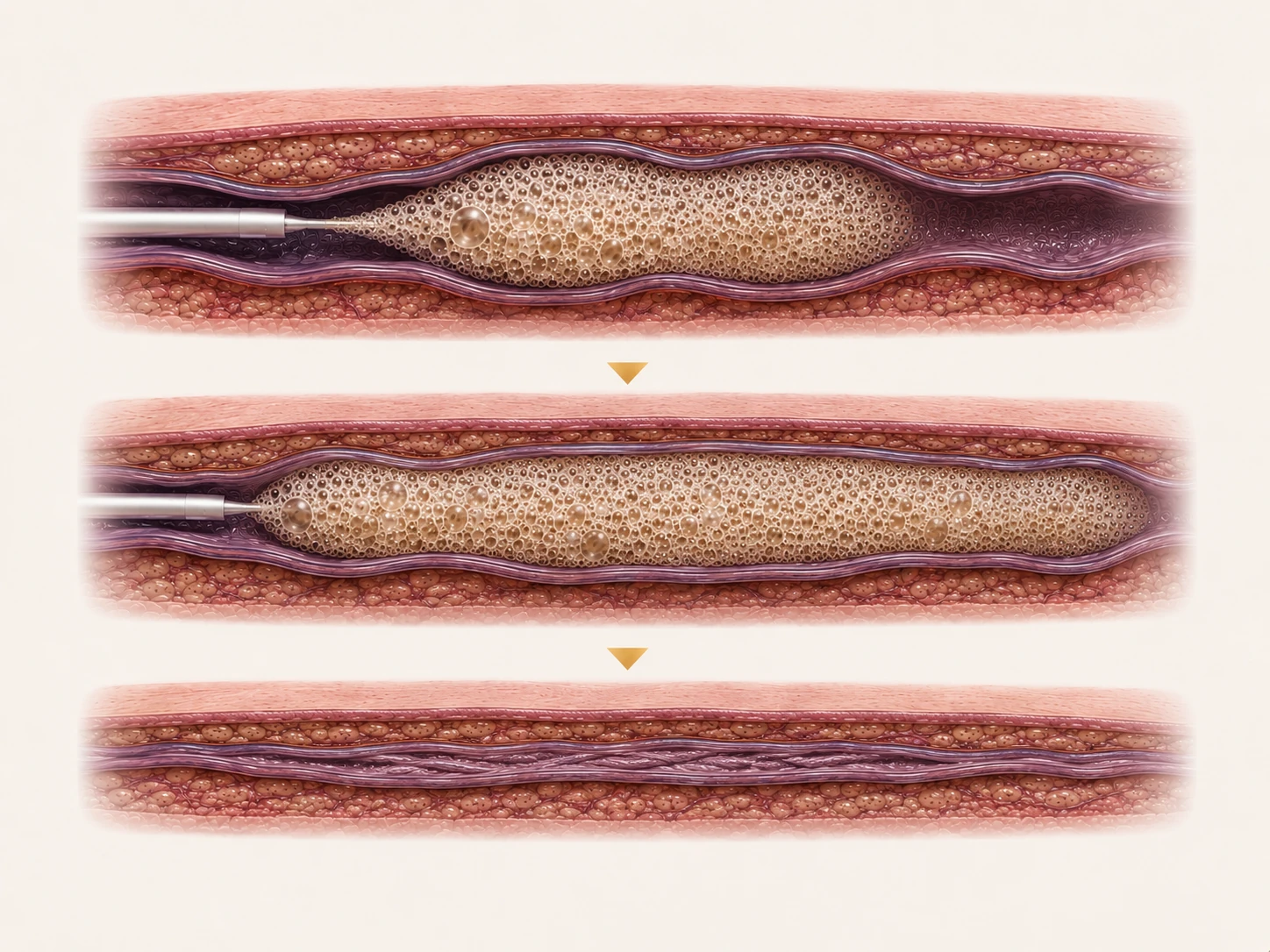
What is Varithena?
Varithena is a non-thermal, injectable treatment for varicose veins and venous reflux. It uses a standardized polidocanol microfoam that fills the diseased vein, collapses it, and seals it shut so blood reroutes through healthy veins. Because it's injected rather than threaded with a catheter, Varithena can reach twisting, tortuous veins that heat-based methods can't easily treat.
How it works
Under ultrasound guidance, Dr. Eduardo injects the microfoam into the refluxing vein. The foam displaces blood and contacts the entire inner surface of the vein, irritating the wall so it collapses and closes. The treated vein is gradually absorbed by your body, and blood naturally reroutes through healthy vessels. No heat and no tumescent anesthesia are required.
Conditions it treats
Varithena treats venous reflux in the great saphenous vein system and is especially valuable for winding, tortuous veins, accessory veins, and veins that have recurred or weren't fully treatable with catheter-based methods. It's frequently used alongside RFA or microphlebectomy.
What to expect
Varithena is office-based and typically takes ~15–30 minutes. You'll be walking immediately afterward, with compression and a short period of avoiding strenuous activity recommended. Walking is actively encouraged right away.
Results & effectiveness
Varithena has demonstrated effective closure of refluxing and tortuous veins in clinical studies, with most patients experiencing symptom relief (source: published clinical studies of polidocanol microfoam). Individual results vary.
Varithena vs. VenaSeal vs. RFA
RFA and VenaSeal thread a catheter up relatively straight veins; Varithena is injected as foam and shines on twisting veins a catheter can't navigate. Many treatment plans use more than one of these together.
Insurance coverage
When ultrasound documents reflux and you have medically significant symptoms, Varithena is typically covered, though specifics vary by plan. See how coverage works →
Risks & considerations
Varithena is polidocanol microfoam, so its risks are those of a sclerosant plus those of any vein closure. Common effects are leg pain or discomfort, bruising, and tenderness over the treated vein. Deep vein thrombosis and thrombus extension toward the deep system are uncommon and are the reason for a follow-up duplex ultrasound. Polidocanol microfoam carries a specific labelled caution about temporary visual disturbance, migraine-like symptoms, and rare neurologic events, which are more relevant in patients with a known right-to-left cardiac shunt.
When it is not the right choice
Varithena is not used in acute deep vein thrombosis, in known allergy to polidocanol, in active infection at the treatment site, or in pregnancy. Tell Dr. Eduardo if you have a known patent foramen ovale or other right-to-left shunt, a history of migraine with aura, or significant peripheral arterial disease. Your full history and duplex ultrasound are reviewed before any treatment is recommended.
FAQ
Varithena FAQ
Can't find your answer here? Call us at (470) 742-1832 or book a consultation, we'll answer every question before you commit to anything.
Varithena is a prescription polidocanol microfoam injected into a diseased vein. The foam fills and displaces blood in the vein, contacting the vein wall and causing it to collapse and close. Blood then reroutes through healthy veins. Because it's injected rather than threaded with a catheter, it can reach winding veins that are difficult to treat with thermal methods.
RFA and VenaSeal use a catheter passed up the vein, ideal for relatively straight saphenous veins. Varithena is injected as a microfoam, so it can treat twisting, tortuous, or previously treated veins that a catheter can't easily navigate. It uses no heat and no tumescent anesthesia. Dr. Eduardo often selects Varithena precisely for anatomy the catheter-based options can't reach.
They're related but not identical. Both use an injected sclerosing agent to close veins, but Varithena is a specific, FDA-approved, standardized polidocanol microfoam designed and dosed for larger refluxing veins (such as the great saphenous system), whereas traditional sclerotherapy is generally used for smaller spider and reticular veins.
Varithena is office-based and typically takes ~15–30 minutes. Most patients walk immediately afterward and return to normal daily activity, with compression and a short period of avoiding strenuous activity recommended. Walking is encouraged right away.
When ultrasound documents venous reflux and you have medically significant symptoms, Varithena is typically covered by many major plans and Medicare, though coverage specifics vary. Our team verifies your benefits and handles pre-authorization before scheduling.
Start your journey
Have twisting veins that other treatments missed?
Varithena may be the answer. Book a duplex ultrasound and consultation with Dr. Eduardo in Newnan.