
Compare · Newnan, GA
Gastric sleeve vs. gastric bypass
Medically reviewed by Dr. Roger Eduardo, MD, FASMBS, Board-Certified General Surgeon. Last reviewed August 2026.
Book a consultation →Sleeve vs. bypass: which is better?
There's no single winner, the right choice depends on you. The gastric sleeve is simpler and fits most patients; gastric bypass produces somewhat greater average weight loss and is preferred when you have significant acid reflux or type 2 diabetes, which it tends to resolve. Below, the two procedures compared attribute by attribute. Individual results vary (sources: Cleveland Clinic; ASMBS).
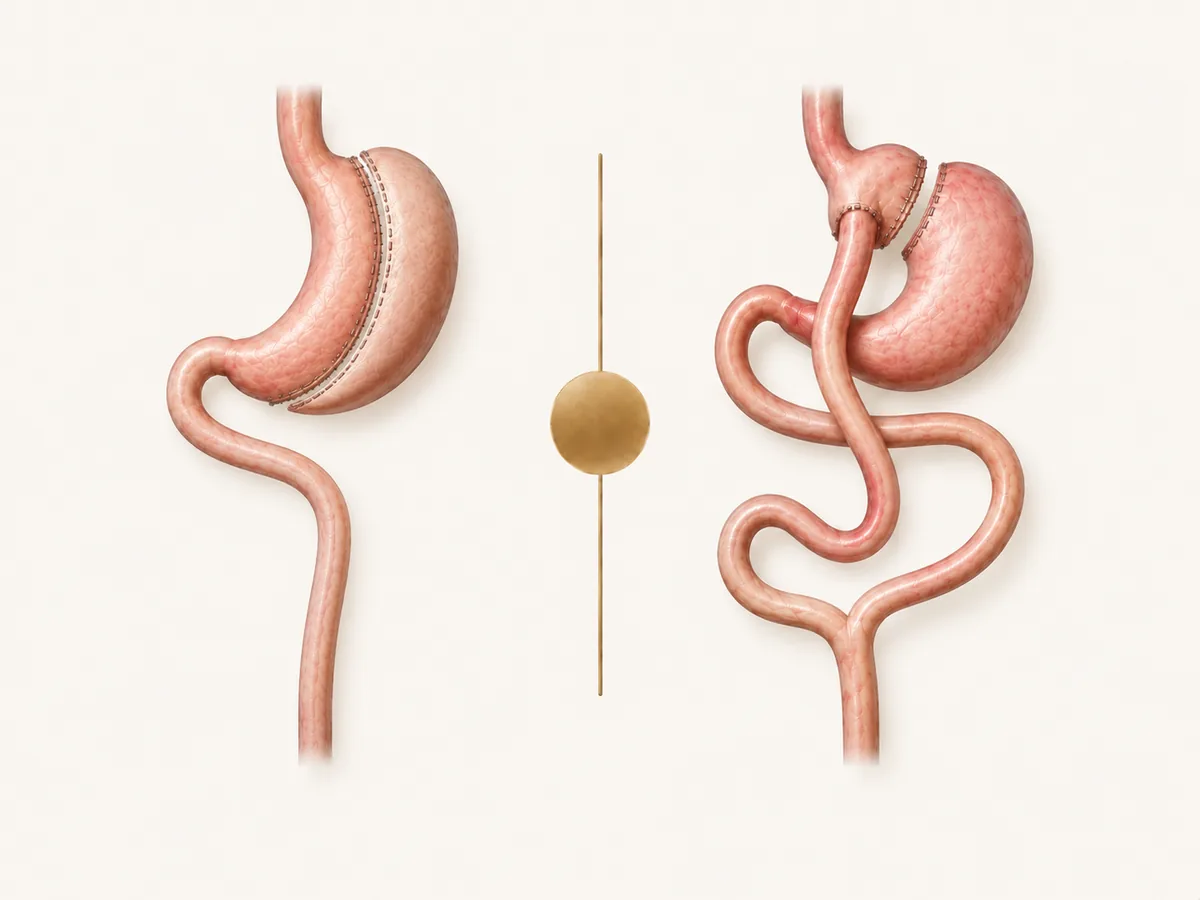
| Gastric Sleeve | Gastric Bypass | |
|---|---|---|
| How it works | Removes ~80% of the stomach | Small pouch + intestinal rerouting |
| Avg. excess weight loss | ~65–75% (year 1) | ~70–80% (18–24 mo) |
| Hospital stay | 1 night | 1 night |
| Return to desk work | 1–2 weeks | 1–2 weeks |
| Effect on acid reflux | Can worsen reflux | Usually resolves reflux |
| Effect on type 2 diabetes | Strong improvement | Strongest improvement / remission |
| Dumping syndrome | Uncommon | Possible after sugary meals |
| Reversibility | Not reversible | Intended permanent; rarely reversed |
| Vitamin needs | Lifelong vitamins | Lifelong vitamins + minerals (more) |
| Best candidate | Most patients; simpler procedure | Severe reflux or type 2 diabetes |
The surgeon's verdict
How Dr. Eduardo decides
"For most patients without significant reflux, the sleeve is an excellent, lower-complexity choice. When a patient has bad reflux or hard-to-control type 2 diabetes, I lean toward bypass, it usually fixes the reflux and has the strongest metabolic effect. The right answer comes from your anatomy, your conditions and your goals, not from a chart.". Dr. Roger Eduardo, MD, FASMBS
Lean toward the sleeve if…
- ✓You want a simpler procedure without intestinal rerouting
- ✓You don't have significant acid reflux
- ✓You prefer a slightly shorter recovery
- ✓You want fewer long-term mineral requirements
Lean toward the bypass if…
- ✓You have significant acid reflux or a hiatal hernia
- ✓You have type 2 diabetes you want to put into remission
- ✓You want the greatest average weight loss
- ✓You've had a sleeve and need a conversion
Already had a sleeve and developing reflux or regain? Sleeve-to-bypass conversion →
Reflux tipping the decision?
Heartburn & GERD surgery
If reflux is part of your picture, bypass usually resolves it, and Dr. Eduardo can repair a hiatal hernia in the same operation.
About heartburn & reflux surgeryNot yet at the surgical range?
Medical weight loss & GLP-1
A physician-supervised, non-surgical program with a clear path to surgery later if it becomes the better fit.
Explore medical weight lossComparison FAQ
Sleeve vs. bypass questions
Can't find your answer here? Call us at (470) 742-1832 or book a consultation, we'll answer every question before you commit to anything.
Neither is universally better, it depends on your profile. The gastric sleeve is simpler and suits most patients; gastric bypass produces somewhat greater average weight loss and is preferred when you have significant acid reflux or type 2 diabetes, which it tends to resolve. Dr. Eduardo recommends the best fit after a full evaluation. Individual results vary.
Both are minimally invasive, most patients go home the day after surgery, and the majority are back to desk work within 1–2 weeks. In practice the difference in recovery between the two is small.
Gastric bypass is usually preferred for patients with significant acid reflux because it tends to resolve reflux, while the sleeve can sometimes worsen it. If you have reflux or a hiatal hernia, tell Dr. Eduardo, as a foregut surgeon he can factor this directly into the recommendation.
Yes. Sleeve-to-bypass conversion is one of the most common bariatric revisions, often done for severe post-sleeve reflux or weight regain. See our revision surgery page for details.
Start your journey
Let's pick the right procedure together
Book a consultation with Dr. Eduardo for an objective evaluation and a clear recommendation, sleeve or bypass.